
You've built a website. You've created content. But if nobody can find you on Google, does it even matter?
That's the frustration most beginners face with SEO (Search Engine Optimization). The good news? You don't need to be a technical genius or hire an expensive agency to start ranking. You just need to understand the fundamentals and take consistent action.
In this guide, you'll learn exactly how to optimize your website for search engines in 2026, step by step, week by week. NO complicated jargon. NO overwhelming strategies. Just practical, actionable steps you can implement starting TODAY.
What is SEO and Why Should You Care?
SEO is the process of making your website more visible in search engine results. When someone searches for topics related to your business, you want to show up on the first page of Google, because let's be honest, nobody clicks to page two.
Here's why SEO matters more than ever in 2026:
- Organic traffic is FREE, you don't pay for every click like you do with ads
- High-intent visitors, people searching for solutions are ready to buy or engage
- Long-term results, unlike paid ads that stop when your budget runs out, SEO compounds over time
- Credibility and trust, ranking high signals authority in your niche
The best part? You can start seeing results within 30 days if you follow the right system. If you want deeper insights into ranking on the first page without hiring an agency, check out these proven SEO tips for small businesses.
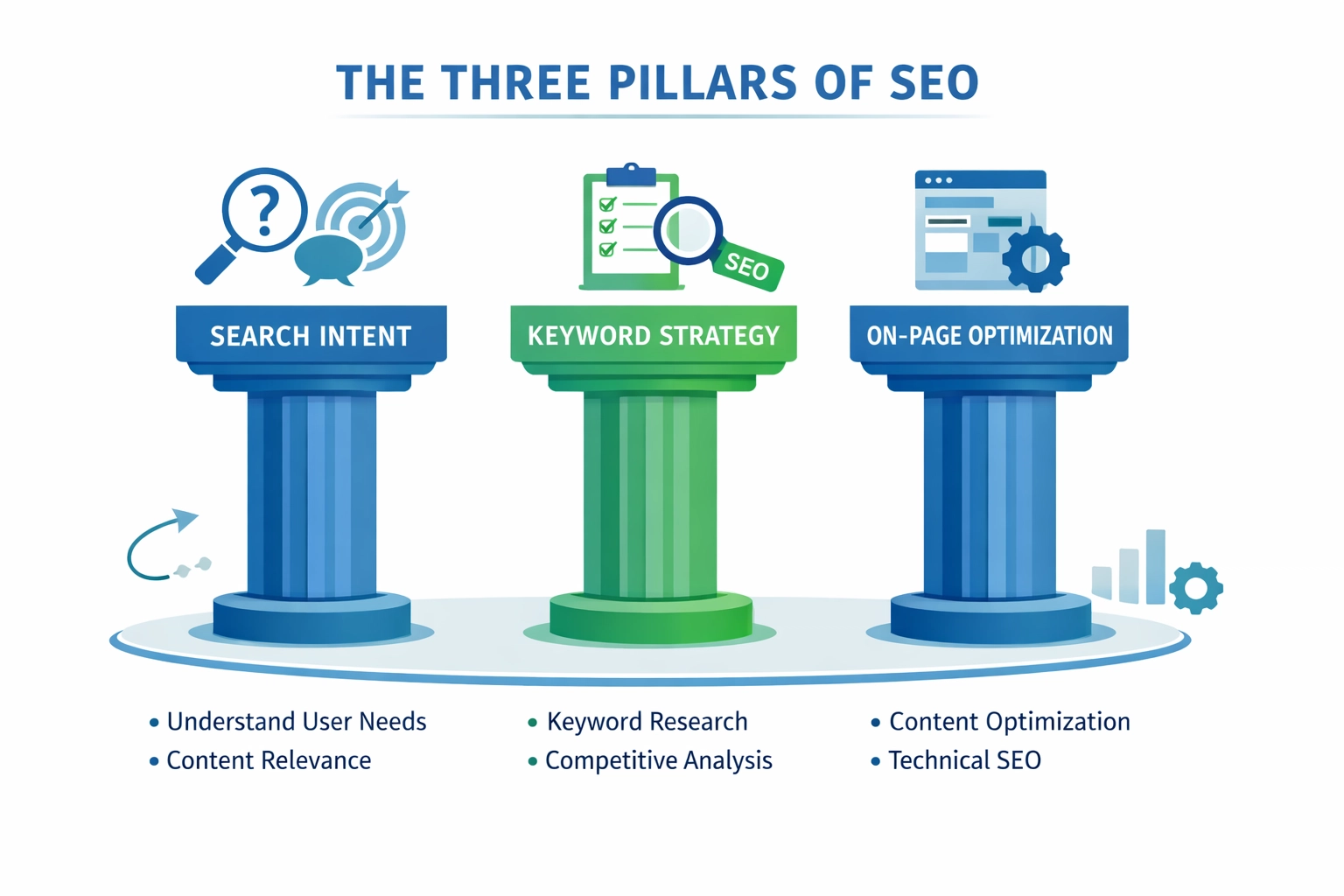
Understanding the Three Pillars of SEO
Before we dive into the step-by-step process, you need to understand the three core pillars that make SEO work:
1. Search Intent
This is the "why" behind every search. Are people looking to buy something? Learn something? Find a specific website? If your content doesn't match what searchers actually want, you won't rank, no matter how much you optimize.
2. Keyword Strategy
Keywords are the exact phrases your audience types into Google. Your job is to discover what they're searching for and create content around those terms. But here's the secret: don't just chase high-volume keywords. Target phrases where you can realistically compete and provide the BEST answer.
3. On-Page Optimization
This includes everything you control on your website, title tags, headings, meta descriptions, image alt text, internal links, and mobile-friendliness. These elements tell search engines (and users) what your page is about.
Now let's put this into action with a 30-day beginner's plan.
Your First Month: The 4-Week SEO Blueprint
Week 1: Build Your Technical Foundation
Start by setting up the tools that will help you track and improve your SEO performance:
- Google Search Console: shows how your site performs in search results
- Google Analytics 4 (GA4): reveals who visits your site and what they do
- Screaming Frog (free version): crawls your site to identify technical errors
Run a technical audit and fix critical issues like:
- Broken links (404 errors)
- Missing or duplicate title tags
- Slow page load speeds
- Mobile usability problems
This week is about fixing the foundation so Google can properly crawl and index your site.
Week 2: Research and Strategy
This is where the REAL magic happens. Talk to your customers. What questions do they ask? What problems are they trying to solve? Use their language to guide your keyword research.
Use free tools like Google Keyword Planner to find relevant search terms. Look for keywords with:
- Moderate search volume (100–1,000 searches per month for beginners)
- Low to medium competition
- Strong match to your business offerings
Map out your site structure. Plan 5–10 "cornerstone" articles that will become your authority content on major topics.

Week 3: Create Your First Optimized Content
Choose ONE high-priority topic from your research. Write an in-depth guide (1,000–1,500 words minimum) that COMPLETELY answers the searcher's question.
On-page SEO checklist:
- Use your target keyword in the title (H1 tag)
- Include it naturally in the first 100 words
- Use related keywords in H2 and H3 subheadings
- Write a compelling meta description (under 160 characters)
- Add 2–3 internal links to other relevant pages on your site
- Optimize images with descriptive alt text
- Ensure the content is mobile-friendly
Focus on providing genuine value rather than keyword stuffing. Google's algorithms in 2026 are smarter than ever: they reward helpful, user-focused content.
Week 4: Promote and Build Authority
Publishing great content is only half the battle. Now you need to promote it and build links.
Promotion tactics:
- Share your article on LinkedIn and relevant social platforms
- Email your existing list (if you have one)
- Reach out to 5–10 websites in your niche and offer to contribute a guest post
- Add internal links from older blog posts to your new content
Building authority takes time, but every quality link and social share tells Google that your content is valuable.
Want to accelerate your SEO results? Join The Internet Insiders Club where you'll get step-by-step training on advanced SEO strategies, keyword research, and content optimization from someone who's been ranking sites for over a decade.
Essential SEO Tools for Beginners
You don't need a massive budget to succeed with SEO. Start with these FREE tools:
- Google Search Console: monitor rankings and fix indexing issues
- Google Analytics 4: understand your audience and traffic sources
- Google Keyword Planner: discover search volumes and keyword ideas
- Google PageSpeed Insights: improve site speed and performance
- AnswerThePublic: find questions people are asking in your niche
As you grow, consider investing in premium tools like SEMrush or Ahrefs for deeper competitive analysis and keyword tracking.
Daily and Weekly SEO Habits That Drive Results
SEO isn't a one-time project: it's an ongoing practice. Here's what consistent success looks like:
Weekly (30 minutes):
- Review Google Search Console for new ranking keywords
- Check Google Analytics for traffic trends
- Audit one webpage for on-page improvements
- Research 5–10 new keyword opportunities
Monthly:
- Publish 2–4 new optimized blog posts
- Update and refresh older content with new information
- Build 3–5 quality backlinks through guest posting or partnerships
- Review and adjust your content strategy based on performance data
The businesses that win at SEO are the ones who show up CONSISTENTLY: not those who do a massive push and then disappear.

Common SEO Mistakes to Avoid
Even with the best intentions, beginners often sabotage their own success. Here are the pitfalls to avoid:
1. Ignoring Mobile Optimization
Google indexes the mobile version of your site FIRST. If your site looks terrible or loads slowly on phones, you won't rank: period.
2. Keyword Stuffing
Using your keyword 50 times in a 500-word article won't help. It'll hurt. Write naturally and focus on solving problems.
3. Neglecting Internal Links
Every new article should link to 2–6 relevant pages on your site. This helps Google understand your site structure and keeps visitors engaged.
4. Focusing Only on High-Volume Keywords
Competing with major brands for ultra-competitive terms is a losing battle. Target long-tail keywords (longer, more specific phrases) where you can actually rank.
5. Creating Content Without Strategy
Random blog posts won't move the needle. Build a content plan around search intent and the customer journey.
What Success Looks Like in 2026
Here's the reality: SEO takes time. You won't rank #1 for competitive terms overnight. But if you follow this system consistently for 3–6 months, you WILL see results:
- Increased organic traffic from Google
- Higher rankings for your target keywords
- More qualified leads finding your business
- Lower customer acquisition costs compared to paid ads
The businesses that treat SEO as a long-term asset rather than a quick fix are the ones that dominate their industries.
Ready to go deeper? Explore the resources at SimonLeung.com where you'll find bonus training, free reports, and access to proven strategies that have helped thousands of entrepreneurs build profitable online businesses.
Your Next Steps
SEO doesn't have to be overwhelming. Start with these action steps TODAY:
- Set up Google Search Console and Google Analytics
- Run a technical audit using Screaming Frog
- Research 10 keywords your audience is searching for
- Write and publish ONE optimized blog post this week
- Add internal links from older content to your new post
Remember: consistency beats perfection. A "good enough" article published today is better than a "perfect" article that never sees the light of day.
And if you want personalized guidance, expert training, and a proven roadmap to ranking higher faster, join us inside The Internet Insiders Club. You'll get access to advanced SEO tactics, live training sessions, and a community of entrepreneurs who are building real businesses online.
The first page of Google is waiting for you. Let's make it happen.